
Long before protein powders and macro tracking became part of everyday conversations, many families were quietly making deeply nourishing meals like this in their kitchens.
Mazăre cu pui — peas with chicken — is a traditional Romanian stew made from simple ingredients that slowly simmer together until the broth becomes rich, savory, and comforting.
Peas provide plant protein, fiber, and micronutrients, while chicken cooked on the bone contributes minerals, collagen, and flavor to the broth. When simmered gently, the ingredients soften together and create a dish that feels both simple and deeply satisfying.
It’s humble food. Affordable. Nutrient-dense.
In many traditional households, meals like this were simply dinner. They weren’t labeled as “high protein,” not optimized for macros, just ingredients that nourished the whole family.
And the best part? Peas are still one of the most inexpensive and accessible sources of plant protein you can buy.
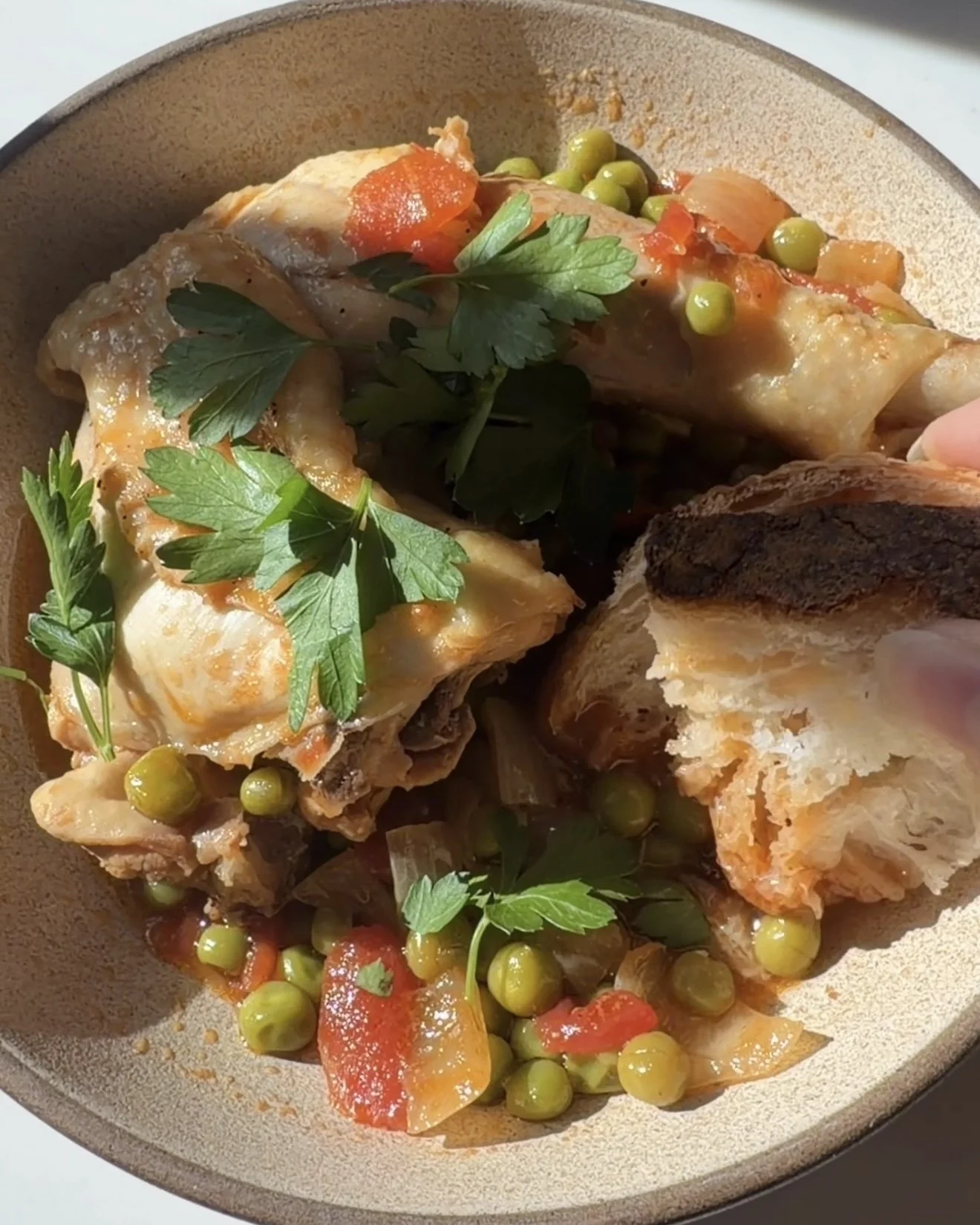
Mazăre cu Pui Recipe
Ingredients
1 organic, pasture-raised whole chicken, cut into pieces (bone-in)
1 organic yellow onion, diced
2–3 tbsp organic tomato paste
2-3 cups green peas (fresh or frozen)
14 oz organic crushed tomatoes (fresh or canned)
1–2 cups organic chicken broth (chicken feet broth or chicken bone broth)
2–3 tbsp olive oil or organic, grass-fed butter (I honestly go beyond 3 tbs)
1 handful fresh organic dill or organic parsley
sea salt + black pepper to taste
quality sourdough bread for serving
Method
1. Build the base
Heat olive oil or butter in a large pot over medium heat. Add the chopped onion and cook slowly until soft and fragrant. This step builds the sweetness and depth of the dish.
2. Add the tomato paste
Stir in the tomato paste and cook it for a minute or two so it caramelizes slightly and deepens the flavor of the broth.
3. Add the chicken
Place the chicken pieces directly into the pot and allow them to cook briefly with the onions and tomato paste. I like to scoop most of the onion on top of my chicken while it cooks. Let them slightly brown. This helps the flavors begin to integrate before adding liquid.
4. Add the peas and crushed tomatoes
Stir in the peas and crushed tomatoes. And season with sea salt and black pepper
5. Add broth and simmer
Pour in the chicken feet or bone broth so everything is just covered. Bring to a gentle boil, then reduce to a low simmer and cook for about 30–40 minutes until the chicken is tender.
6. Finish with herbs
Add fresh dill or parsley at the end of cooking. Serve warm with torn sourdough to soak up the broth. Also pairs well with rice or quinoa.

Ways This Dish Was Traditionally Served
Meals like this were rarely complicated. A pot on the stove would feed the entire family.
With bread
A slice of sourdough or rustic bread was usually served alongside to soak up the broth.
With pickles
Fermented vegetables like cucumbers or cabbage added brightness and acidity to balance the stew.
The next day
Like many stews, the flavor often deepens overnight, making leftovers even better.
If You Don’t Eat Sourdough
A slice of sourdough is the traditional way to enjoy a stew like this, but you can easily serve it with a simple whole grain instead.
Quinoa is a great option. It’s naturally gluten-free, rich in minerals, and adds extra protein while still soaking up the broth nicely.
A small bowl of jasmine or white rice also works beautifully if you prefer something softer and more neutral with the tomato and chicken flavors. Maybe you want comforting but don’t do bread… then I may suggest some nice roasted potatoes to go with it.
Personally, I aim for balance. Most of the time I choose simple whole foods, but occasionally a good slice of sourdough with a bowl of stew is exactly the right thing.
Why Peas Are Such a Nourishing Food
Peas are one of the most overlooked whole foods when it comes to everyday nutrition.
They provide plant-based protein, fiber, and a wide range of micronutrients that support metabolic health, digestion, and stable energy levels.
Peas are also naturally rich in lysine, an essential amino acid that many plant foods lack. Lysine plays an important role in collagen production, tissue repair, and overall metabolic function in the body.
Their combination of fiber and resistant starch helps nourish beneficial gut bacteria while also supporting balanced blood sugar levels after meals.
Yet ironically, instead of eating peas in their natural form, many modern products isolate their protein and turn it into powders and processed supplements.
Traditional dishes like this one remind us that these nutrients were always available through simple whole foods prepared slowly and eaten as part of everyday meals.
Are Peas a Good Source of Protein?
Yes…peas are actually one of the better whole-food sources of plant-based protein.
One cup of green peas contains roughly 8 grams of protein, along with fiber, vitamin C, folate, and several important minerals that support metabolic health.
For generations, peas were simply eaten as they are: gently simmered in soups, stews, and rustic dishes like this Romanian mazăre cu pui.
When combined with bone-in chicken and a slow-simmered broth, the meal becomes even more nutritionally balanced. The peas provide plant-based protein and fiber, while the chicken contributes additional amino acids, collagen, and minerals extracted during cooking.
Together they create a dish that is simple, deeply nourishing, and satisfying in a way that whole foods often are.
Why Traditional Stews Like This Matter
In many cultures, slow-simmered meals like this were the foundation of everyday nourishment.
Chicken cooked on the bone contributed minerals and collagen to the broth, vegetables added micronutrients, and legumes or grains provided fiber and sustained energy.
Nothing was labeled a “superfood.”
It was simply dinner.
Meals like this nourished families for generations because they combined whole ingredients in ways that made them both satisfying and nutritionally balanced.
Sometimes the foods that supported health for centuries were the simplest ones sitting quietly in our kitchens.